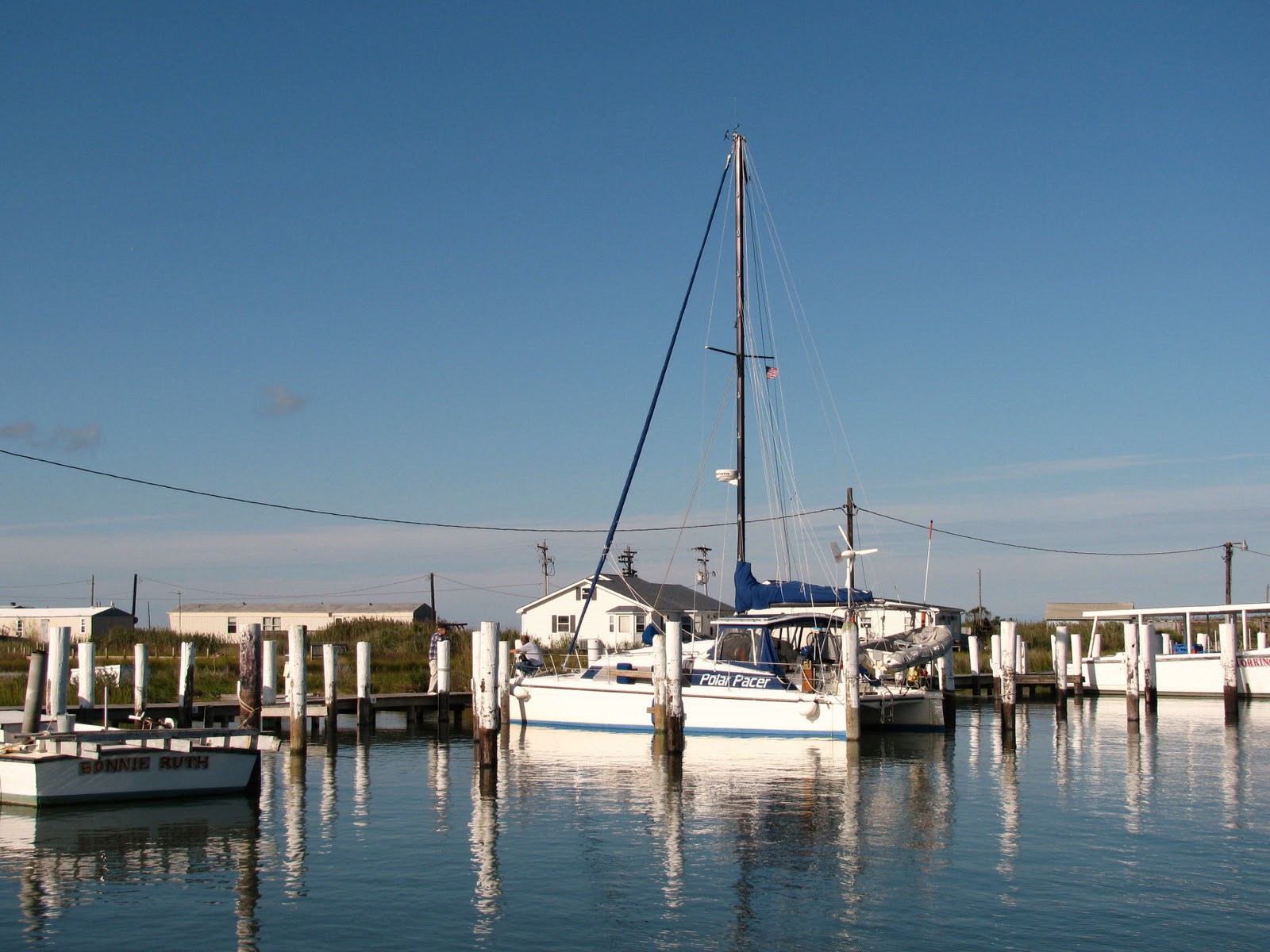
Friday, November 19, 2010

Oriental to Charleston

Oriental, North Carolina to Charleston, South Carolina, October 23 to November 1, 2010

Q. How many pairs of binoculars should you have on board?
A. At least one pair for every set of eyes in the cockpit.
We started out with two pairs by Bushnell (7x50 and 16x50) that never get taken out of their cases, a small pocket size pair that we thought would be handy to carry ashore (Of course we never think about them until we’re ready to use them and there’s no point going back for them.) and a pair of West Marine’s best, bought during a 50% off sale, that have lived with us in the cockpit since day one. We sometimes had to fight over them.  Not anymore. A trip to the marine consignment store in Oriental produced a pair of previously owned, high end 7x50’s from Fujinon for $85. A comparable pair in Defender’s online catalogue  are $682. I think we got a good deal.

 
 I still can’t find where I stashed the small pair. There are just too many hiding places. I know they are somewhere on the boat.


Dolphins in the Adams Creek Canal. They really are hard to take photographs of so I have resorted to taking lots of video and cutting out the long stretches where all you see is water. These were the first ones we spotted this year while traveling down the Adams Creek Canal.

Sometimes life just gets too technical.
It all started with wanting to know how much electricity we were getting from our wind generator.  (Well, it probably really started a year earlier when the 60 amp alternator that came with the new engine was replaced with an 80 amp alternator in order to charge the batteries quicker.) We installed a battery monitor made by Bogart Engineering .The first thing the battery monitor told us  was that we were not getting as much charge from the 80 amp alternator as we thought we should be getting. Although we do not often need to run our engine solely to charge batteries, it would be nice to get the highest possible output when we do and minimize the engine running time.
When we were in Washington, DC a Balmar Max Charge MC-612 was purchased and the 80 amp alternator modified so they could work together. Everything seemed to be fine except that the tachometer was giving erratic readings. A switch was put in so the alternator could be operated in Small Engine Mode when we are motoring and need the power for the propeller.
When we went to start the engine to leave Hampton the new starter battery was dead. This was a surprise as we had been plugged in at the dock for two days and the house batteries were fine. We used the crossover switch to start the engine and hoped that the situation would fix itself. When there was no change in the status of the starter battery after several days we decided to stop at the next West Marine and get a new one.
Two days later, after leaving Morehead City, the house batteries were not charging and the amp meter on the new monitor was going crazy. The problem indicator light on the echo charger was blinking. The newest starter battery was reading 17.1 volts. We were in crisis mode at a point on the ICW where the dredged channel is very narrow. Outside the channel the water is very shallow, even for our 3 foot draft. After some complicated maneuvers that must have been entertaining to the morning traffic that was catching up to us, we managed to get the anchor down at the side of the channel where Tom proceeded to disconnect the external regulator, remove the 80 amp alternator and reinstall the 60 amp alternator that we had started out with a year ago. 
Boats at anchor at Morehead City, North Carolina

This year’s hurricane season was predicted to be much more active than what we saw last year and has proven to be just that. Ida was as far as they progressed through the alphabet last year and this season we have already seen Tomas. Although none have come close enough to cause us any concern, we have watched their formation off of the coast of Africa and with the help of many excellent weather websites, tracked their progress across the Atlantic and up the coast of North America. 


 Hurricane regulations for one of the bridges.

  Just so you know what to expect if one hits.

This menacing cloud came by Wrightsville Beach where we were anchored but did not amount to much.

  Making perogies in Wrightsville Beach. The silicone baking sheet works well for rolling out dough in a small space.

The stretch of the ICW between Wrightsville beach and Myrtle Beach does not have a lot of choices for good anchoring. Skipper Bob’s Anchorages Along the Intracoastal Waterway (a.k.a. A Cruisers’ Bible for the ICW) lists Shallotte Inlet at mile 329.5 as an option with good holding and wind protection with a strong current and a sandbar building in the middle of the anchorage. The next option was 10 miles and at least two hours away. It would probably be dark before we could get there. 

We saw a boat anchored as we approached and it looked like there should be enough room for Polar Pacer as well as the other boat that was travelling with us. We had just pulled over to the side of the channel to let Mutual Fun pass by. The next thing we knew we had been picked up by the current and deposited crosswise in the river right on top of the sand bar! We were in 2.7 feet of water. We need at least three feet and a bit to float and the tide was still going out. We put out a stern anchor to prevent us from being pushed any deeper into the sand. Attempts to get ourselves unstuck only accomplished polishing the propeller with sand.
TheTow Boat US driver arrived about ten minutes after we placed the call for help. Twenty five minutes later he had pulled us off, assisted by Mutual Fun’s dinghy pushing from the side, and did not leave until he was satisfied that we were safely anchored for the night.

 Tow Boat US and Mutual Fun to the rescue.

Being a fan of the blues I was looking forward to a stop at Barefoot Landing in North Myrtle Beach. I had read about the the House of Blues Concert Hall located there and was hoping for some good entertainment. Yes, there is a concert hall, and yes, the establishment has a blues theme but no, there was no live entertainment of any sort in this run of the mill restaurant chain on a Thursday night – not even a local one man show playing for free beer. Oh well, for happy hour they were serving $2 beer and very large $3 margaritas. The décor had a certain amount of entertainment value too.

  The House of Blues at Barefoot Landing. The patchwork siding is recycled metal from old barns.

Fine art on the walls at the House of Blues
The pub crawl continues. Burgers and Beer with the Mutual Fun crew.
 
The strategy to get the best value for your marine docking dollars is to plan your arrival as early in the day as possible and leave as late in the day as possible. The Charleston City Marina is one of the more expensive marinas on the ICW and we really wanted to get our timing right. We anchored in Whiteside Creek, just off the waterway and 10.7 miles from the Ben Sawyer Bridge that separated us from Charleston Harbor. The bridge opens on the hour starting at 9 AM. We left the anchorage as soon as there was enough daylight to navigate. We expected to have the current against us and were prepared for a leisurely trip to arrive for the 10 AM bridge opening. The tide tables on our electronic charts are sometimes subject to interpretation and we ended up with the current in our favor and it looked good for the 9 AM opening.The closer we got to the bridge the narrower the navigable channel became and the busier the boat traffic got with everyone having the same idea – to make it to the 9 AM opening. We were reluctant to push the engine too hard as it had been overheating. Sure enough, the alarm went off and we were forced to slow down and let things cool down a bit much to the annoyance of the sailboat captain who was right behind us wanting to pass without having to move over into the shallow water to do it. 

We managed to get the engine cooled down and reached the bridge enough ahead of time that we had to wait for a few minutes.  In the process of waiting we drifted a little too close to the crab trap line on the edge of the channel and picked up a marker line with our prop! There we were, tangled up and the bridge about to open any minute. Tom was quick to locate the Henkel bread knife, lift the drive leg  and saw through the line. No damage was done and we still had enough time to motor through the bridge with the rest of the pack.

Remember Fred? He was with us for the Halloween season last year. Well he was back again this year.
This time he decided that the new storage lockers on the back deck would be a good place to stow away.
We discovered him when we returned to River Dunes from a shopping trip in Oriental. We think he may have been hanging out on Tangier Island and crept aboard when we went to Hilda’s for dinner. Fred was disappointed that Halloween in Charleston was such a quiet affair. Most of the big parties and club events happened on Saturday night and we didn’t arrive until Sunday morning. Decorations were still up and we saw a few college kids in costume who were either just going home from the night before or on their way to an afternoon “hair of the dog” party.

 Leftover decorations in the yard of a frat house.

The Charleston City Marina (a.k.a. The Megadock) is convenient for exploring the historic city by foot.  By taking different routes between the marina and the downtown area there is always something interesting to see.
 Intricate wrought iron decorates many historic buildings from modest side yard gates…..
… to larger commercial enterprises.

One of several historic churches in Charleston.
This facade is all that remains of a building where slaves were assembled for auction. A museum has been constructed behind the facade.


Monday, November 1, 2010

Revisiting Some Favorite Spots

Revisiting Some Favorite Spots – October 10 to 22, 2010

Hampton, The Dismal Swamp, Elizabeth City and River Dunes. Four places on the Intracoastal Waterway that are on our list of favorites.
This was our third stop at Hampton and we timed it right for Open Mic Night at Goodfellas blues club. Tom spread the word to every boat on the dock at Hampton Public Piers. We had lots of company but it wasn’t quite the same without Iron Genny.

  The Cruisin’ Crowd At Goodfellas.

 The music was every bit as good as last year with another appearance from “Red”. 

 Red in action.


This group probably did not get as much respect as they deserved.

Passing through Norfolk. No – we did not transport to the other side of the continent.

These are the guys who try to keep us safe with the weather broadcasts.

Warship #51 in dry dock.

The summer drought in the region caused the locks at either end of the Dismal Swamp to reduce their openings to twice per day due to low water levels. This caused a number of boaters to opt for the Virginia Cut route to the Alligator River. Good for us that they had sixteen inches  of rain in a matter of days prior to our arrival and they were back to four openings per day. With the higher water there was also less risk of scraping the bottom of the canal and dislodging any more logs.


If a tree falls in the Dismal Swamp will anybody care? Absolutely! There was barely enough room to get around this one and one boat that went through shortly after us transferred some of its instruments  from the top of the mast to the top of the trees. The Army Corps of Engineers removed it later that same day.

A raised walking trail through Dismal Swamp Park.


 The raft of boats at the Visitors Welcome Center was a little smaller than last year. We spent two peaceful nights there…

 …and left in the morning with mist rising around us.
In the lock.

 Polar Pacer in the Dismal Swamp. Thanks to Anna Livia for the photo.

There have been some unfortunate changes to our favorite places in the year that has passed. We had hoped to repeat one of the highlights of last year when we stopped in Elizabeth City. The Rose Buddies are still holding their wine and cheese welcome reception for cruisers but the Carolina Theatre and Grill has closed its doors. No dinner and a movie this time around.  Hopefully it will re-open someday soon. The economic recovery is not very apparent in the waterfront area of Elizabeth City. There seem to be more empty stores and other commercial properties than I remember from last year. All the more reason for boaters out there to make Elizabeth City a destination. Special places like this will only survive if we support them with our business in return for them supporting us with free docking and a warm reception.
The blimp station was another location that saw a turn of bad luck since last year. We saw three blimps tethered in the yard when we went by last time, this time there were none.  In a strong wind one of the blimps broke free from its tether and collided with another blimp. Both were destroyed.
That was not the only catastrophe in the blimp station’s history. According to David, our Rose Buddy host at the cruisers’ reception, the original blimp factory was destroyed by fire one night after some welding work had been done. The fire started two hours after the fire watch went off duty. The building was too high for the fire department to reach and all they could do was stand back and watch it burn to the ground.

The original blimp factory was a huge wooden structure supported by these four concrete frames.

 The new blimp factory. The small door on the end is used to bring in tractor trailer loads of supplies.

We anchored in the Alligator River in almost the exact spot as last time and had a peaceful and warm night on the hook. We were treated to a small private air show as several military fighter jets circled overhead and demonstrated high altitude climbs and loops.
Fog started to roll in the next morning as we headed for the entrance to the Alligator-Pungo Canal. As it got thicker we had to turn on our radar in order to navigate. We could still dimly see the sides of the canal but not what was ahead or behind us.

 Barbara was only about two hundred feet ahead of us.

At one point the radar screen showed an object quickly approaching from behind. We tried to peer through the fog to see what it was but could only see a dim shadow in the distance that looked like it might be another boat. Soon the radar showed the object moving alongside us then pulling ahead.  We still saw nothing. We eventually came to the conclusion that there must be a road paralleling the canal and the phantom boat being picked up by the radar was probably a car.

River Dunes, near Oriental, North Carolina, is another gem that deserved a repeat visit. This upscale marina, attached to a equally upscale planned community, still has very competitive prices and a courtesy car. Unfortunately the dryers in the laundry are near the end of their useful lives. Dinner In the elegant  second floor restaurant of the Harbor Club was formal enough to feel special but casual enough that we didn’t feel too out of place having a few wrinkles in our ‘going ashore clothes”. The chef did wonderful things with the tuna that had just come in from the ocean earlier in the day.

River Dunes also had its share of bad luck this year. During an exceptionally bad electrical storm towards the end of June, the development fell victim to several damaging lightening strikes. One building was struck by lightning and burned to the ground. It was uninhabited at the time.

This photo was taken a year ago.
 A patch of bare ground has replaced the space where this house previously stood.

There is a new lady on board Polar pacer. Her name is Sylvia. Sylvia Cilantro. Sylvia joined us on board at Elizabeth City. She is a quiet guest who does not have a lot of needs. She is quite happy to sit in a sunny corner of the cockpit and only asks for the occasional drink. No salt on the rim please. Her previous landlord, Mark, who manages the Ace Hardware store in Elizabeth City , opened a fresh bag of potting soil and sent a few cupfuls with her as a parting gift. Her sister has also taken up life on the water and is currently on board Serena and is en route to Cocoa, Florida. Sylvia will travel south with us and would like to make it to the Bahamas as well.


Meet Sylvia.


Friday, October 22, 2010

Down the Potomac, Tangier Island and Back to Deltaville

Down the Potomac, Over to Tangier Island and Back to Deltaville – October 2 to 9, 2010

We had been quite proud of the 100% success rate with our 35 pound Delta anchor system since we began our trip over a year ago. That changed when we dragged anchor in the Washington Channel in DC and had a close call from an unmanned boat that sped past us backwards dragging a Delta along the bottom and headed directly for a nearby mega yacht. We now have a 33 pound Bruce as our primary anchor and it has passed the tests so far. 

Our first anchorage after leaving Washington was amongst the crab pots on Potomac Creek, a branch of the Potomac River. If we had dragged there we would have had quite a tangled mess. The next night we were back at St Mary’s City where we had arranged to meet Mac and Ruth on Carmella.  We rafted together for the night and had a wonderful spontaneous (the best kind) pot luck dinner with the gang on Carmella. Carmella weighs 28,000 pounds, Polar Pacer weighs 12,000 pounds. Little Bruce held us both just fine.

Rafted

The tug and barge relay. One came from each direction. The barges met nose to nose and the big tug left the little tug to handle them both.

We wanted to fill our diesel tanks and sit out some rainy weather before we headed off to Tangier Island so we followed Carmella home to Kinsale Harbour. During a break in the rain we pulled the Dubarry boots out of storage and headed down the highway on foot to find a convenience store. When we were almost there, Kip and Linda, a couple of boaters that we had not yet met, recognized us from the marina and stopped to offer us a ride. Five hours later we had skipped the convenience store, went with them to Ace Hardware in the next town, bought supplies at the ABC liquor outlet, stopped at MacDonalds for lunch, picked up groceries from Walmart in another town, went with them to their home to see the boat they are rebuilding and some lovely hooked rugs and patchwork quilts that were in progress. Then they took us back to the marina where we spent another hour visiting each other’s boats. They were wonderful company and the rainy day was over before we knew it. They also own a boat transport business based in Virginia. If you need a boat moved anywhere in North America, give them a call at Boat Lovers Transport: 804-472-9223.

When you leave the mouth of the Potomac and head due east you will arrive at Tangier Island after four or five hours. You won’t see it until you are almost there. The island is very low and flat with the highest point of land being about 4 or 5 feet above sea level.

Approaching Tangier island from the west.

When you arrive by boat there is really only one place to stay – Mr. Parks Marina. Besides electricity and water, the very reasonable docking fees include Mr. Parks guided tour of the island on his golf cart built for two. And when you pay your fees at the end of your stay Mr. Parks will try to give you your money back because he does not think he did enough for you while you were there. 

 
Polar Pacer at Parks Marina

Tangier Island is a community whose economy still depends almost entirely on the water. Soft-shell crab is one of their specialties.  

Crab traps ready to be set.

These peeler shacks on stilts are where crabs are kept in tanks until they molt and shed their hard shells.

Tangier island also has a few seasonal restaurants and B&B’s to serve the small tourist industry. Hilda Crockett’s Chesapeake House with its family style meals has been in business for 71 years. The menu is the same every day for both lunch and dinner and yes, she does serve crab cakes.

This lady told us that she was preparing blue crab meat to sell to one of the local restaurants. When her husband brings home the days catch she cleans and steams them, refrigerates them overnight and removes the meat in the morning.

How many blue crab to make a crab cake?

How to steam Blue Crabs: According to the North Carolina department of Agriculture & Consumer Services
Make sure crabs are lively before placing in a pot. Discard any crabs that appear dead. The crab pot should have a raised rack a minimum 2 inches high. Add equal quantities of water and vinegar to just below the level of the rack. Layer crabs; sprinkle each layer with a mixture of seafood seasoning and salt. Cover and steam until the crabs are red (about 25 minutes).

There are few automobiles on the island. The quickest way to get around is by boat, golf cart or bicycle. We walked the length of both streets on the island and took the dinghy through the water courses that crisscross 
the land. 

 
We went aground with the dingy more than once and had to use the oars to pole ourselves through the mud. Polar Pacer is the shorter of the two masts.

 
Automobiles on the island that need repairs are precariously loaded crosswise on the supply boat using two by fours for ramps and taken to the mainland for service.

The parking lot at the ferry dock.

Usable vacant land is scarce. As a result, many homes have graves in their front yards to reduce the risk of the caskets floating away with high tides.

  
There seemed to be as many cats as there are people. Mr. Parks claimed to have 27 cats. 
We only counted 14.

 
For such a small island it still had a long deserted sandy beach.

Sunrise over the peeler shacks.

From Tangier Island we headed back to Deltaville to pick up a new solenoid for our electric windlass.  The one that had been ordered for us in Washington DC didn’t fit and arrangements were made to pick up a replacement from West Marine. We managed to sail about halfway back across the bay before the sails came down and the diesel took over. 

When kids get bored …….

Rova kept an eye on us as we crossed the bay.

In Deltaville, our new friends very generously offered the use of the dock next to Rova and invited us to share margaritas and guacamole with them at their cottage after they drove us around to run errands. Emma and Jack – It was so nice to meet you and your parents and spend some of our adventure with you. It is chance meetings with such wonderful people that make this lifestyle so enjoyable. 


Saturday, October 9, 2010

Up the Potomac

Up The Potomac – September 17 to October 1, 2010
Head north from Deltaville and turn left when you reach Smith Point Light. After trying to do just that for a week, we finally made it to the mouth of the Potomac.

Smith Point Light

During our visit to Ontario in August, LSYC members Pat and Peter told us about their visit to St. Mary’s College at St. Mary’s City on the St. Mary’s River. The timing was right for an overnight stop. We decided to check it out and ended up staying for two days.We anchored in 15 feet of water at horseshoe Bend, just off of the docks used for the sailing program at the college.

 
Sailing school dinghies.

St. Mary’s College is a liberal arts school with a student population of about 2000. The 319 acre waterfront campus is idyllic with mature trees, walking trails, historic buildings and its own sailing center with a sandy beach. It feels more like a resort than a school. We walked around the campus and had lunch and dinner at the school cafeteria that is open to the public. The food was great and very reasonably priced.

 We did not get invited to the college beach party at the sailing center and didn’t think we would blend in very well if we crashed it. Oh, to be young again!

 If you take daylight savings time into consideration this campus sun dial was only 10 minutes off the correct time.

Adjoining the campus is Historic St. Mary’s City which was established in 1634 and was the original state capital of Maryland before the seat of government was moved to Annapolis. St. Mary’s City is known for several American firsts: freedom of religion was mandated, the first African-American participated in colonial legislature and the first woman requested the right to vote. The settlement was later abandoned and returned to farmland for many years. The site has been rebuilt using techniques and materials that are based on what has been learned from extensive archaeological activity.

The reconstructed ‘ordinary’ where early travellers would have stopped for sundowners.

The landscape is scattered with these frames on original footprints depicting the buildings that once existed.

Early morning departure from St. Mary’s


We expected the trip to Washington, DC to take three or four days. We left St. Mary’s very early in the morning and headed up the Potomac with a list of anchorages as potential overnight stops. We soon caught a strong up river current and by late afternoon we had reached Mattawoman Creek, just a few miles from downtown DC. After stopping on the river to chat with the Canadian catamaran Zero to Cruising and hearing that their upriver trip had taken six days we were quite pleased with our progress.

Communication dishes on the banks of the Potomac.

On our arrival at the entrance to Washington Channel we were escorted by dinghy to the Capital Yacht Club docks by a member whom we had met last year at the Seven Seas Cruising Association ‘gam’. This is not a service normally provided by the club. Bill just happened to be passing by in his dinghy and recognized Polar Pacer.

The Washington Channel is also the flight path for US government helicopters. 
They fly low and are loud.

The club members and staff at CYC are very friendly and helpful and for a nominal fee anchored cruising boats can access their clubhouse facilities which include showers, laundry, pump out, bar service and wi-fi. We were also welcomed to join them for Spaghetti Night and Rainy Day Soup. The volunteer cooks are very skilled. And many thanks to Mike and Jean for hosting us for dinner on board and making a special grocery store run.

There are how many different kinds of shrimp?

From the CYC parking lot it is an easy walk to the fish market and many of the museums and monuments that Washington, DC is so well known for. On our first day we had an early start and took the dead presidents walk past the Thomas Jefferson, Franklin Roosevelt and Abraham Lincoln Memorials to the Reflecting Pool, World War II Memorial and the Washington Monument. Then we spent three hours walking through the Museum of American History!

The Reflecting Pool
  Forrest Gump was nowhere to be seen.

After almost wearing out the soles of our shoes we slowed the pace down a bit but still managed to cover a lot of ground and see most of the Smithsonian Institute. These are just a few of the highlights of our Washington tour:

The view of the anchorage from the top of the 555 foot high Washington Monument on a drizzly morning. Polar Pacer is third from the left.

The White House.
Every car that gets this close is searched by bomb sniffing dogs.

 
   The black statue sits in front of the Canadian Embassy. 
Its white twin is in the Museum of Civilization in Ottawa.


The Capitol Building.
The House was in session but we were able to tour much of the building without having to get a special pass.

Opened in 1897, the Library of Congress is an amazing example of Italian Renaissance architecture. 

We saw one of the few remaining 15th century Guttenberg bibles and rough drafts of the Declaration of Independence. If you have a valid library card you can download eBooks, audio books and much more from its extensive collection. Check it out at www.Find LIBRARYeBooks.com.

 Best selling fiction writer Isabelle Allende, niece of assassinated Chilean President Salvador Allende, was one of the authors interviewed at the annual Library of Congress Book Fair. 
She is a very animated speaker with a wonderful sense of humor. She is now on my ‘need to read’ list. 
Ken Follett, Martha Grimes and Scott Turow were other familiar names on the agenda.

The government of Russia provided the Air and Space Museum with this replica of Sputnik 1, the first artificial satellite to orbit the earth. The Soviet Sputnik program was prominent in the news when I was a child.

Tomatoes on sale at the Eastern Market on Saturday.


The National Museum of the American Indian was designed by Douglas Cardinal, the same architect who designed Canada’s Museum of Civilization in Ottawa. 

Our favorite exhibit was Up Where We Belong: Native Musicians in Popular Culture which comes with headsets so you can listen to the music of Redbone, Buffy Sainte Marie and others as you go through.

Jimmy Hendrix’s Coat of Many Colors

And there was much, much more. Entry to all of the Smithsonian Museums, gardens and Art Galleries is free. We could have spent several more weeks there and still not seen everything. It was definitely worth the trip up the Potomac.


Relevant Reading : Dreams from My Father by Barack Obama

In this book, written well before he was elected president of the United States, Barack Obama talks candidly about his childhood in Hawaii and Indonesia and what it was like for him to grow up black in his white family and having a father that he had never known. He speaks about abandoning a career in the world of high finance to become an “organizer” in the poor, mostly black, neighborhoods of Chicago where he struggled to provide leadership and show them how they could make a difference in their own lives. Over time his sense of family was challenged as he made contact with his extended family and travelled to Kenya prior to attending harvard Law School to meet his numerous step brothers and sisters, aunts and uncles and his grandmother.
Always focusing on the human side of his experiences, Mr. Obama is an excellent writer and his memoir reads like a novel, ending on a note of romance with his marriage to Michelle.

The Portrait Gallery in Washington DC does not yet have an official portrait of Barack Obama but has this fine art version of the mass produced campaign poster by Los Angeles graphic artist Shepard Fairey.

        Michelle Obama’s inaugural gown is a recent addition at the Smithsonian’s National Museum of American History.